A standout dance alum was set to be hired at Rock Ridge High School, returning to help coach her former team for a modest $4,791 stipend. The job was the fifth item on the school board consent agenda in December, a spot typically reserved for “noncontroversial” matters and approved in less than a minute.
Her hiring went sideways quickly. The coach resigned in late January.
Aynsley Erickson, on paper, was the perfect pick as the assistant coach. A graduate of the district, she represented the dance team at state competitions, and wasn’t far removed from the program after graduation. But a social media video posted in 2022 of Erickson, who is white and was a student at the time, freestyle rapping racist lyrics that included wanting a “Holocaust, but only with n*****s,” was willfully overlooked throughout the process.
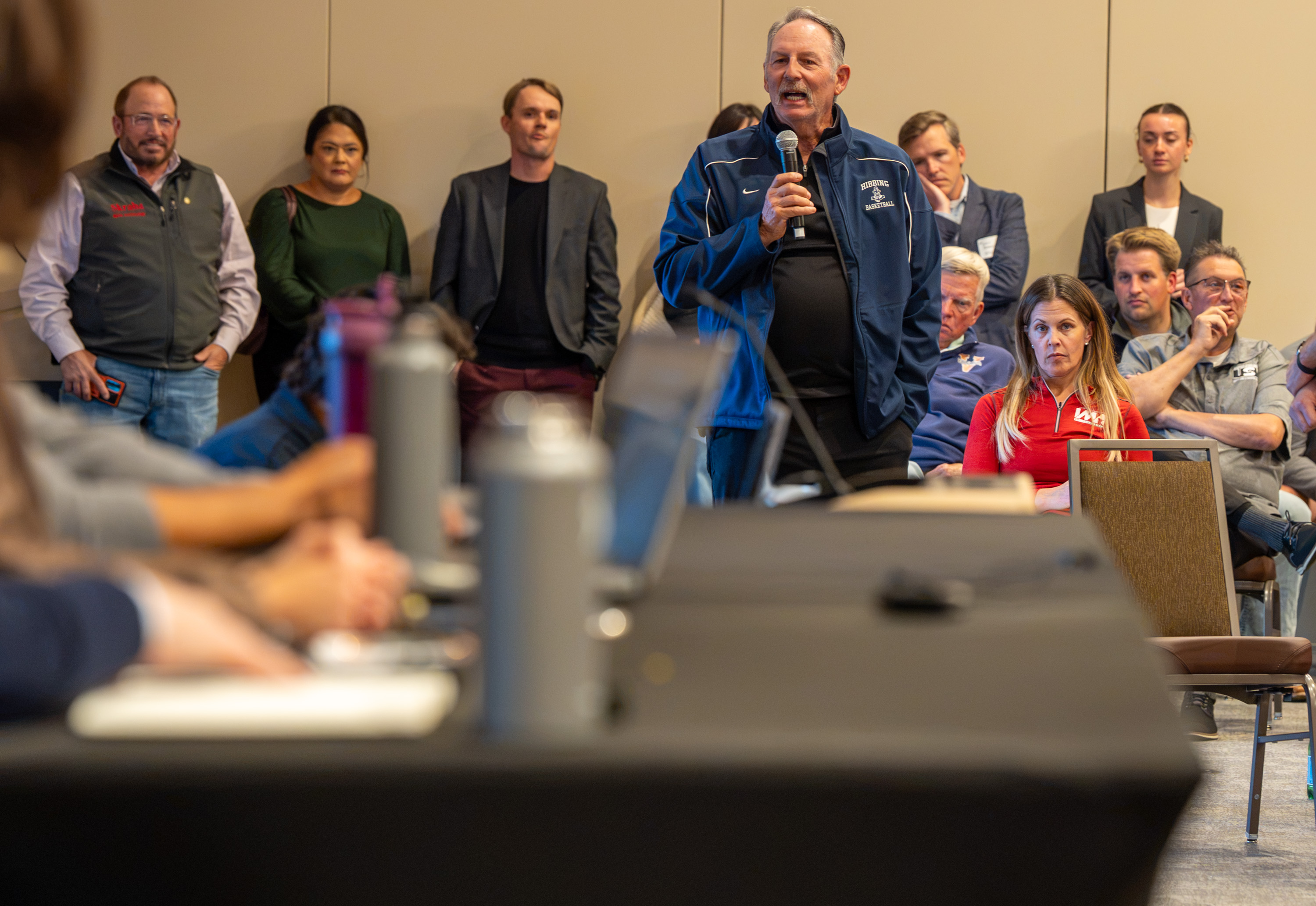
Community members took notice and confronted the district’s superintendent. When they finally met on Jan. 23, Dr. Noel Schmidt said the board “knew exactly who they were hiring and what they were hiring.”
Over the last several weeks, Erickson’s brief tenure has opened a new point of contention between Rock Ridge and marginalized communities on the Iron Range, which flared up in recent years over a pattern of unforced controversies amid heightened cultural tensions.
It also sparked a renewed effort by Voices for Ethnic and Multicultural Awareness (VEMA) and others in the Rock Ridge community to bring systematic shortfalls on race to the district’s attention. After meeting with Schmidt, several people spoke directly to the board at its meeting on Jan. 27, appealing for a new set of policies and accountability.
What’s happening in the Rock Ridge district now is a clash of fluctuating historical demographics and increased anxiety among rural minorities over cultural politics, with the ho-hum nature of small town government and systemic norms that shaped and dominated the region. The hiring of Erickson was a collision of these forces, the latest flash point in a conversation VEMA has framed as ignored in bad faith, and the district countering that it exerted effort toward improving.
“She was in a leadership position, so what does that show the community?” said Nathaniel Coward, co-executive director of VEMA, who is Black, to the school board. “She can say that and still get a job, so why can’t we? I just don’t understand this mindset. How could you collectively drop this ball?”
Schmidt admitted Rock Ridge “could have done a better job” handling the Erickson situation. School board members offered no insight on their thought process in approving the hire without discussion. More talks and meetings have been proposed.
Some parents of current and former students said the district has continued to neglect racial disparities in its hiring process and disciplinary actions, and failed to act on suggestions made by VEMA to improve the district’s culture. This comes as diversity, equity and inclusion (DEI) measures have been reeled back in recent weeks by the federal government and large corporations.
“Show us the work,” said Seraphia Gravelle, a co-founder of the social justice organization, to Schmidt. “Show us the work that was done so you can look at him and him and her, and all these people around you that don’t look like you, that their children are safe in your school.”

Tension, missteps add up
The Iron Range is heavily conservative and the collective population of the three cities is 92 percent white. Demographics have changed only moderately in the last 40 years, according to the Center for Rural Policy Development. It’s a region that lost 27% of its population aged 25-34 between 2000 and 2010, and is home to a wide income disparity where more than half its households either clear $100,000 a year or less than $35,000.
Rock Ridge formed as a school district in 2020 amid this backdrop and the simmering tensions of an election year and COVID-19 restrictions. Its creation was the result of a slow-walked process to consolidate the Virginia and Eveleth-Gilbert schools as they faced declining enrollment and mounting costs to maintain aging buildings.
Despite a public vote to combine, district leaders faced a maelstrom of pushback from some residents who felt their history and identity was being erased as multi-generational classrooms were slated to be torn down for new structures.
When the police murder of George Floyd in Minneapolis sparked a renewed Black Lives Matter movement, and peaceful and violent protests across the U.S., those tensions boiled over. Small towns were spared the violence, but still had a mirror held up to them over diversity measures and increased boldness by some residents to be openly racist. VEMA formed the same year in response with the mission of educating local communities on racism and prejudice.
That context charted the course to this point.
When an almost exclusively white segment of parents crammed the Rock Ridge board’s public comment period in 2021, falsely claiming it was teaching Critical Race Theory, the district instituted time limits for speakers. A year later, following the Erickson video, Schmidt met with VEMA to discuss changes and added equity to the Rock Ridge strategic plan, but the organization said its action items were cast aside or approached without diverse voices in the forefront.
Prior to the 2023-2024 school year, the policy committee moved to update the district’s dress code to reflect state standards, which included a line specifically protecting hairstyles largely associated with Black culture. When the draft policy was made public for viewing, the new provision was listed as inappropriate clothing. The policy sat for almost two weeks before it was amended and approved amid outcry. Committee members called it a simple mistake.
Erickson was hired in 2024.
“My big question to them is did they think nobody was going to notice?” said Paul Gregersen, executive director of Cultures, Humanities and Arts on the Iron Range (CHAIR). “The fact they voted to approve the employment for this person, without acknowledging beforehand or explaining to anybody what they’re doing, that’s an insult to our community’s intelligence.”
Schmidt bore the brunt of frustration from VEMA and community members before the board meeting, and has tried to chart a path forward, but nobody in Rock Ridge leadership beyond him has publicly addressed it.
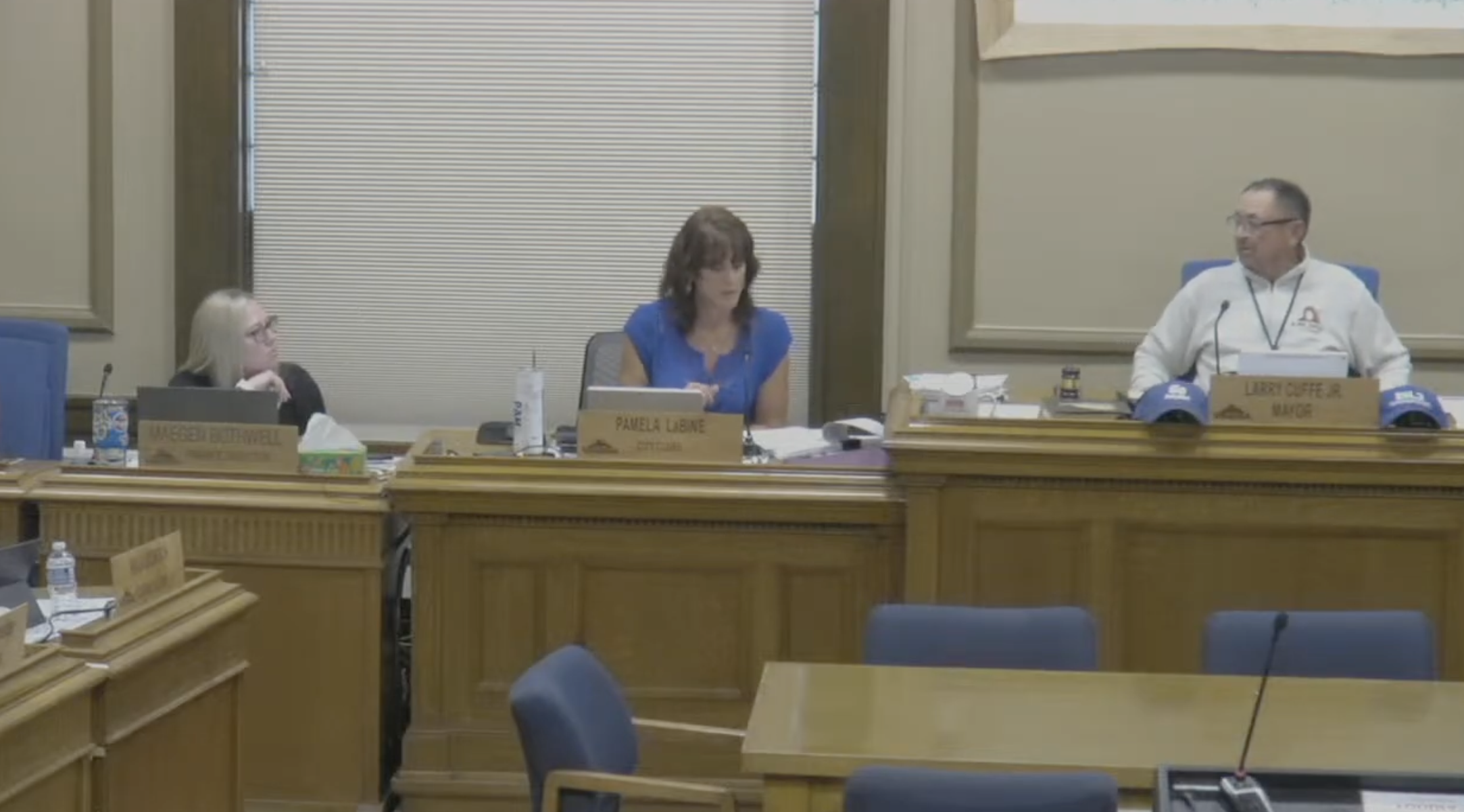
At the January board meeting, directors heard from seven community members, but remained silent except to notify speakers of their time limit. During a brief discussion later, two directors suggested a cultural liaison for Rock Ridge, which Schmidt said was a position the district used to have and was vacated.
“We don’t have a strategic plan where everything was done that we said we were going to do,” Schmidt said. “To me, a strategic plan is where we want to go and see where we are, and if things are working. If they’re not, then we stop, and do something else.”
Gregersen, in a letter to the board, requested a working session on Feb. 11 to hold a prolonged discussion and work toward new anti-racism/discrimination policies. But Coward and Gravelle, of VEMA, said concrete steps are needed. They met with Erickson, who is now an adult, and her mother. They had a productive conversation, but the broader issue remained with Rock Ridge.
“I think for anything to move forward, the school is going to have to do some kind of work, starting with accountability,” Gravelle said. “It seems like a pretty realistic ask.”
To which Schmidt responded, “I don’t see how the school is going to do nothing.”

Disparities in discipline, education
David Wrenn pulled his son out of Rock Ridge in seventh grade and enrolled him a half hour away in Hibbing. A 10th grader now, he’s a boxer and an athlete, but after too many experiences walking the halls and experiencing the Nazi salute or other racial epithets, he called home ready to fight back.
Suspension, jail or probation weren’t an option, Wrenn said. He’s an honor roll student who is cutting music albums on the side. Wrenn is Black. His wife, Sasha, is Mexican. They moved to the Iron Range 13 years ago from California. At home now are his son, a 7-year-old daughter and two 10-year-old grandchildren.
“It’s not just here, but they’re real comfortable around here with it,” Wrenn said of racist remarks. “Everyday [the kids] come home having to defend themselves because of the way they look. I brought them here, so I have to explain to them why dad, why grandpa brought y’all here to be exposed to this shit.”
Rock Ridge’s student population and staff don’t diverge far from the region’s demographics.
This school year, 84% of the student body identified as white. American Indian students make up 7%, students with two or more races account for 4.8%, while Black/African American and Hispanic/Latino make up about 1.2% each. Less than a half-percent identify as Asian or other.
When considering discipline, Schmidt said Rock Ridge would want suspension rates to mirror — or close to mirror — student body demographics. The actual numbers were “bad data” for the district. So were attendance rates, when compared to advanced education class enrollment, which showed a wider disparity between white students and students of color.
“It’s not going to be useful to pretend something isn’t happening, or to be angry at someone else because they’re seeing it differently than you’re seeing it,” Schmidt told the board.

On average in the last two school years, 68.3% of the out-of-school suspensions at Rock Ridge and 73.4% of in-school-suspensions were white students. American Indian students were suspended out of school 13.2% of the time and 11.5% in school.
Black/African American students consisted of 7.7% of out-of-school suspensions — a rate 542% higher than that of students occupying the district — and 2.7% of in-school-suspensions.
Attendance across all populations in Rock Ridge has averaged 93% this year, but white students make up a disproportionate amount of those enrolled in Advanced Placement (AP) classes, College in School classes (CIS) and Postsecondary Enrollment Options (PSEO), the latter which students attend classes through Minnesota North College.
For the 2024-2025 school year, white students made up 94% of those in CIS, 90% in PSEO and 100% in AP classes. American Indian and Hispanic students each made up 0.5% and 2.8%, while multiple race students totaled 4.3% and 4.6%, respectively.
Zero Black students were enrolled in any of the classes this year, and only 1.3% (one student in PSEO) was enrolled for the 2023-2024 school year.
“We have some students in the high school who should be taking some of these courses. I know this to be true,” Schmidt said. “Is it encouragement? What is it? That’s one area to take a look at.”
Jay Jackson, a Black paraprofessional at a public charter school on the Range, said the issues at Rock Ridge have persisted for years and many students have left the district over racism and bullying. It’s daily, according to the students he’s heard from, but questioned if it was being acknowledged by district leaders.
Rock Ridge has had opportunities, he added, but standing idle has tarnished its reputation among diverse communities.
“This is just a little drop in the bucket of what’s going on in school,” Jackson said. “And nobody’s addressing it.”

Breakdowns in process, accountability
In December 2022, Rock Ridge scheduled listening sessions and meetings with students, staff and community members after the Erickson video was posted. VEMA was directly involved and felt the district was headed in the right direction to confront what Gravelle called “hard truths.” The district promoted workshops and spaces for students of color to relay their experiences.
Few of the collaborative ideas came to fruition.
A separate anti-racism policy was not added, though the district notes 13 “anti-racism” policies. Many are boiler plate templates from the Minnesota School Board Association, updated when required to comply with state laws.
Diversity training for staff and administration was done from within. Schmidt said the district’s staff was about 95% white. Diverse hiring efforts also fell short. Only one person with a diverse background was hired for the 2024-2025 school year. Meetings with students to openly discuss their experiences with racism at the school were led by Schmidt, who is white, and not a staff member or community person of color.
“And were things put on paper? Absolutely,” Gravelle said. “Rock Ridge absolutely put things on paper, however, what we have heard and have been told by the students and staff since [2022], is that even the things that they had put on paper have not been adhered to.”
As news of Erickson’s hiring reached social media and charges of systemic racism against Rock Ridge bubbled up, Schmidt wrote a letter to parents on Jan. 15, but didn’t directly address the assistant dance coach.
At the Jan. 23 community meeting, where he said the board and administration were aware of who they were hiring, the superintendent declined to say if he held responsibility to speak up about it. Schmidt noted there were multiple consequences in 2022, as the video was “way, way beyond” the norm, but couldn’t share details as Erickson was a minor at the time.
Still, Gravelle said, communications from Rock Ridge focused on moving forward without recognition of the damage done to people and students of color.
“It’s not accountability,” Gravelle said. “It’s an abdication of your responsibility. Forgiveness is not yours to grant.”
At best, what happened was a breakdown of several processes that allowed for little scrutiny of an activities hiring, said Gregersen, of CHAIR, but he also said it was a lack of judgement for many involved in hiring Erickson. They should have known the stakes.
Emily Jankila was the head dance coach when Erickson excelled for the Wolverines. She’s also the director of Indigenous Education at Rock Ridge, simultaneously working as an advocate for students of color.
The application first crossed her before going to Activities Director Josh Lamppa, whose approval sent it to human resources where a criminal background check was peformed. A criminal background check does not include social media, so any red flags were not raised at that level before it moved to the school board consent agenda, where directors and Schmidt would see it.
“If we’re talking about a systematic failure, we’re talking about the dance coach to the activities director,” Gregersen said. “It should have ended there.”
Coward, of VEMA, said he’s done with the “same old story,” but he isn’t expecting anything to change because Rock Ridge is a “good ol’ boys system” that supports its own. The same racist taunts and discrimination, against the same students, has followed them through elementary school and into high school.
It shouldn’t take protesting at the schools, he added, but talks have only lead to lip service. The district has policies in place, but there’s still a problem if they’re unenforced. Waiting for Rock Ridge to get it right is a privilege, but one Coward said the students and people impacted don’t have.
“These children are still being born and they still gotta deal with it,” he said. “But when you see your children being hurt, and people that look like you, who understand you, and you see their children being hurt. So, you see the same thing in their eye, same thing in their children’s eye that yours go through, and y’all still talk about it. That was two years ago. Do it, just call me when it’s actually time y’all are going to do something.”