Cleveland-Cliffs reported Monday that it’s exploring the rare earth mineral potential of two mines in Minnesota and Michigan. Development was still in the early stages.
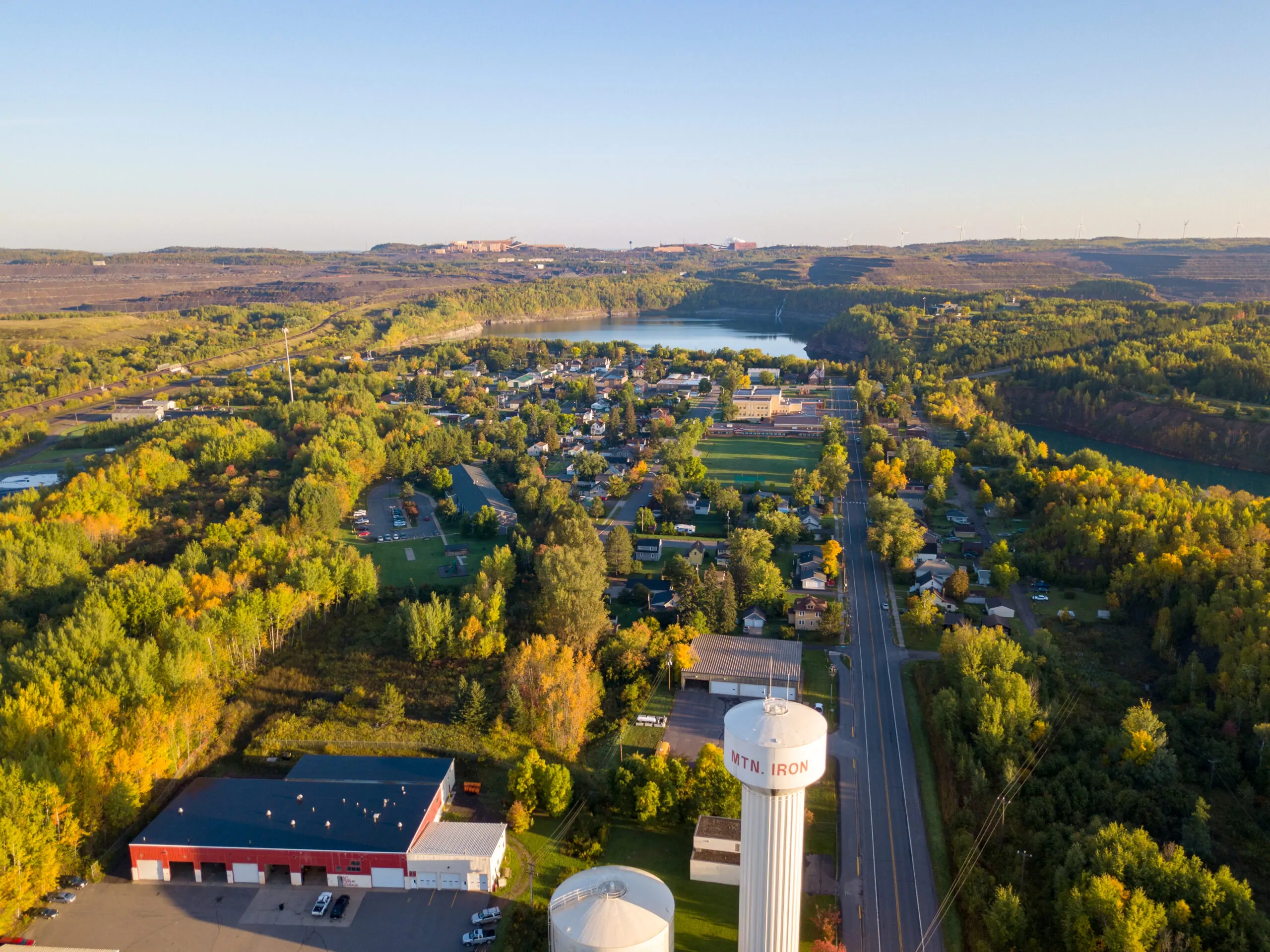
Cliffs CEO Lourenco Goncalves declined to say which Iron Range mine was being explored — the company fully owns Northshore, United Taconite and the idled Minorca Mine, and partially owns Hibbing Taconite — but said geological surveys of the ore bodies and tailings basins showed rare earth mineralization.
During an investor call Monday, Goncalves didn’t offer a timeline for when, or if, the company could move forward. Renewed focus on rare earth metals by the U.S. government, he added, factored into the exploratory efforts.
“We have the opportunity to develop the mining, assuming that all these original studies will play out as we expect, and we’ll go from there,” Goncalves said. “We’ve identified two sites and are working with geologists to determine if they’re commercially viable.”
Mining critical minerals has been aspirational so far for Minnesota-based sites. NewRange (formerly PolyMet) has attempted to open on the East Range for 20 years. Twin Metals Minnesota submitted mine plans in recent years for an underground copper-nickel mine near Ely. Talon Metals has a mineral deposit near Tamarack.
Despite the potential for mining these metals in the state, projects have been held up or altered as environmental groups won legal challenges against permits. Talon announced this year it would move the processing end of its potential mine to North Dakota.
A 2024 survey by the Fraser Institute recently ranked Minnesota as a middle-of-the-pack location for mining potential, and in the bottom-10 overall for investment attractiveness. How mining companies viewed the state’s policies heavily contributed to its low ranking.
Goncalves said Monday that “Minnesota is not very friendly to us, but we’ll still investigate them.” Exploration would start in Michigan’s Upper Peninsula — “because we love the Upper Peninsula” — and mining rare earth metals would present an opportunity for the U.S. and Canada to partner.
Cliffs owns the Canadian steelmaker Stelco, which it closed on last November. Goncalves didn’t elaborate on what a partnership between the countries would look like, or if Stelco would play a role.
“There are several ways to go with this thing, and the important thing is that the geographical location would be good for both,” he said. “We can do it inside the United States. We can do it in Canada because we’re very close, across the pond, across the Great Lakes. It’s very easy to work within the United States or with Canada.”
A ‘transformational’ global deal
Goncalves also announced that Cliffs entered into a “transformational” memorandum of understanding with an undisclosed global steelmaker seeking more access to the U.S. market.
The MOU was signed in September and a formal announcement expected this year. No other details were provided, except that the company would shelve outside interest to purchase the hot-briquetted iron facility in Toledo, Ohio.
This year, Cliffs had focused on selling non-core assets as it took heavy losses in the end of 2024 and the first two quarters of 2025. Goncalves said Monday there are principle agreements for eight sites, with a combined value of $425 million.
A sale of the Toledo plant, he added, would be “de-prioritized” as the MOU took shape.
Ohio was selected for the HBI plant by Cliffs in 2017 after the company failed to acquire the former Butler Taconite site in Nashwauk, now owned by Mesabi Metallics, through bankruptcy proceedings. The Nashwauk site was considered for the HBI plant, Goncalves said at the time.
More recently, the HBI facility was targeted to supply Big River Steel in Arkansas if Cliffs’ bid to purchase U.S. Steel was successful. Nippon Steel instead bought the rival steelmaker, rendering the Toledo plant without “specific strategic value” to the company.
“We still have a lot of interest in that specific plant, but this discussion with the MOU and the subsequent work that we’re doing with our partner is showing that we might be doing other things with that plant, which I will not elaborate at this point,” Goncalves said.
Automotive industry rebounding?
Steel shipments to automakers rebounded in 2025 and Cliffs signed two-or-three-year agreements with its major automotive sector customers through 2027 or 2028, the company announced Monday.
Goncalves called the signs encouraging for the domestic market and the company’s automotive-grade steel plants. He offered no indication that Hibbing Taconite or Minorca Mine would rebound from their indefinite idle during the life of the contracts, but said “Cliffs has plenty of capacity right now” to operate the steelmaking plants at full levels.
Pellet capacity was chief among the reasons Cliffs idled Minorca and Hibbing Taconite this spring, throwing more than 600 jobs into limbo as the cyclical nature of the Iron Range economy swung against the region.
The company credited Section 232 steel tariffs for the “significant rebound” to domestic steel demand, highlighting a decision by Stellantis to invest $13 billion to increase U.S. production by 50%.
“We have five plants, full plants, that are ready to supply a lot more out-exposed parts than we are supplying right now,” Goncalves said. “As they are being compelled, in the lack of a better term, to produce cars in North America … they are coming to senses and coming back to the reality that North America is their main market, and Cliffs is their main supplier.”