My first reaction last year when someone floated Sen. Amy Klobuchar’s name as a potential candidate for governor was laughter.
The open secret of Minnesota Democratic politicos is that her political style and personal attributes are uniquely ill-suited for the office.
She’s an infamous micromanager, known for sending late night emails berating staff over trivial issues. That might be OK when employing a few dozen Capitol Hill aides, but not when you’re managing the entirety of state government and its 36,000 or so workers.
Her rough treatment of staff was aired out in a series of articles during her 2020 presidential run and confirmed what I’d been hearing for years. Citing former staff, The New York Times described a work environment marked by “volatility, highhandedness and distrust.”
Klobuchar is also a scholar of her own press clippings. The morning after the 2016 police killing of Philando Castile, I was working at the Star Tribune, and a colleague was rounding up reaction from elected officials. Her staff called to complain that her quote deserved better placement. Which seemed like misplaced priorities — and a subplot for “Veep.” Stories ripped through the Star Tribune newsroom about her staff calling the copy desk — the paper’s beleaguered last line of defense — to browbeat them in the hopes of getting changes to stories that had posted online.
(If you’re reading this, senator: Skip ahead — this column will take a turn.)
When you’re governor, this behavior would be a huge distraction. Something always goes wrong in state government, which means negative stories about the governor. That’s just the job: being handed a piece of dung and doing your best to polish it up. Every day.
The obsession with public image is related to another problem: Klobuchar loves 60-40 issues, meaning the approval of 60% or more of the public. She’s against dangerous children’s furniture. She’s for local breweries and local music venues. Even her more ambitious ideas, like antitrust enforcement of Big Tech, are broadly popular.
This issue positioning and relentless politicking has contributed to her status as the state’s best vote getter, by far. In 2012, she lost just two of the 87 counties she famously visits every year. (Known in Minnesota politics as “the Full Klobuchar.”) Her margins of victory have decreased since, but in a polarized time, her electoral performance is remarkable, and she’s a solid favorite to become the state’s first woman governor over a field of largely unknown Republicans.
How has she used that vast political capital? Too often, by cajoling the (mostly) old white men of the U.S. Senate into signing on to her legislation, making her the champion of bipartisan bills of relatively minor consequence.
As governor, however, those 60-40 issues are rare: You have to make a dozen daily decisions that are close calls and will anger some interest group, and they’ll march on the governor’s residence, and TV crews will show up. And the worst thing you can do is delay a decision, leaving state government paralyzed while you chew over the political ramifications. Unlike the time she hilariously refused to say whether she preferred the Iowa or Minnesota state fair — afraid of angering Iowa presidential caucus-goers — the stakes of indecision and inaction as governor are much higher.
Finally, Klobuchar is an older-style Democrat who came of age when the party lost three consecutive presidential races. They turned to Bill Clinton, who moderated the party’s image on crime and the economy, triangulated against the ailing left and shrank politics down to the kinds of popular issues that Klobuchar has mastered.
If she’s elected governor, however, Klobuchar will need to negotiate a state budget just months after she takes office with — in all likelihood — Democratic majorities anchored by younger, more progressive Democrats who want to reshape the economy by redistributing income and wealth downward. They have little regard for the state’s corporate behemoths and their CEOs, in contrast to Klobuchar’s Yalie ease with America’s elite.
As I’ve considered this potential fiasco, however, I’ve also come to think some of these Klobucharian attributes might actually be what Minnesota needs.
After the theft of hundreds of millions, perhaps billions of dollars from our safety net programs, the Southwest Light Rail debacle, our mediocre academic scores, etc. — maybe state government could use some micromanaging right about now.
“She’ll be more hands on with the agencies,” predicted state Sen. Zaynab Mohamed, a Minneapolis Democrat. “They need serious leadership that will focus on delivering services to people who need it while also focusing on program integrity,” she said.
Lee Sheehy, who was Klobuchar’s first Senate chief of staff and ran Democratic Gov. Mark Dayton’s transition in 2010, acknowledged that she won’t be able to micromanage 35,000 state workers.
“So what’s the most important thing for state government’s CEO? Attracting talent,” he said.
Sheehy rattled off a list of Klobuchar alums who have often gone on to big things: Jake Sullivan was President Joe Biden’s national security adviser after working in the Obama administration; Tom Sullivan had a senior role in the Obama and Biden State Departments; Andrea Mokros helped put on the Super Bowl in Minneapolis; Cynthia Bauerly became a respected commissioner of the Department of Revenue.
What’s the occasional cell phone thrown in your direction when you know she’ll turn you into a sharply bladed knife?
To be fair, Klobuchar expects her staff to work endless hours because she’s putting in the hours herself.
Consider those annual visits to 87 counties and the people she’s met in two decades at endless ribbon cuttings and hot dish potlucks and union hall breakfasts and Rotary lunches. Farmers, small business owners, Native leaders, mayors, clergy, local cops and prosecutors. (She was a “tough-on-crime” county attorney for eight years, for better or worse.) She also knows all of their issues.
“Minnesota is a big, complicated state with massive regional differences and lots of opinions about lots of different issues. No one knows the state better than Amy,” said U.S. Sen. Tina Smith, who was chief of staff and then lieutenant governor to Dayton before he appointed her to the Senate.
Mohamed, who previously worked at CAIR-Minnesota, said Klobuchar worked to get security money for 27 Minnesota mosques under constant threat of arson and vandalism.
Which ought to remind us that despite my dismissiveness of her legislative record, smallish, uncontroversial legislation can have high stakes after all.
(And, to be fair, her legislative resume includes some bigger ticket problem solving, like quickly securing funding to rebuild the I-35 bridge after the deadly 2007 collapse; an important elections bill to prevent another debacle like 2020, when we had to rely on then-Vice President Mike Pence’s honor to justly remove President Trump from office; allowing Medicare to negotiate better drug prices; and the every-five-years farm bills.)
From a different angle, her governing strategy isn’t vain and vacuous — it’s deliberate. She seeks to solve lots and lots of problems that might be irrelevant to you but significant to someone else. Add it up, and pretty soon you’ve solved a lot of problems.
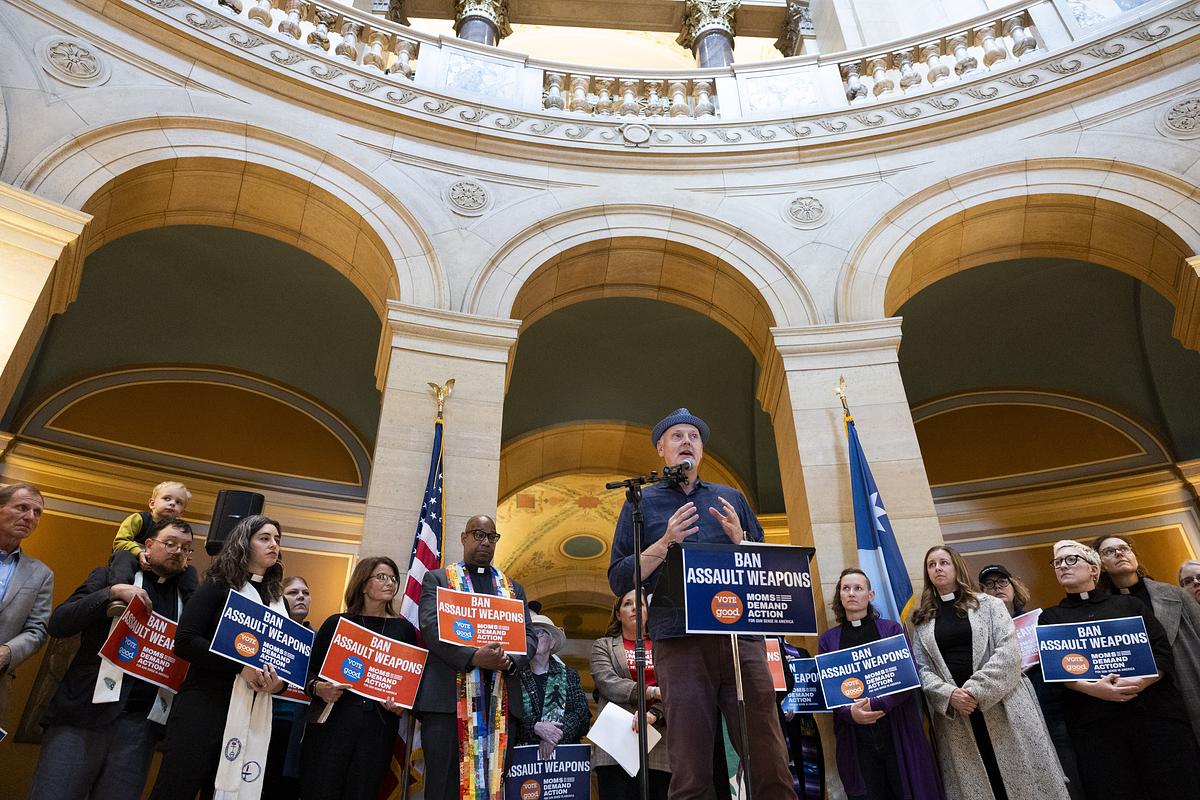
Mohamed is precisely the type of younger progressive Democrat who I expect would clash with Klobuchar, but Mohamed is satisfied that Klobuchar won’t stand in the way of legislators “getting important issues done for our communities,” she told me. For Mohamed, whose district includes Annunciation Catholic Church, that means a ban on weapons like the AR-15-style rifle used in the massacre there. (Of course, Klobuchar has talked with Annunciation parents.)
Mohamed recently sat at a table with Klobuchar at an Iftar dinner, and said she was further comforted by an hour-long phone call with the senator.
In fact, Klobuchar called all Democratic lawmakers before she announced her run.
That’s 101 phone calls. I’m sure not all of them were an hour, but still, do the math.
After 20 years in the Senate, Klobuchar will be attuned to legislators and their needs, Smith said.
“When governors founder, it’s often because they disrespect the legislative branch. And you don’t pay attention to the fine, detailed work of figuring out where the coalition is, and she knows how to do that,” said Smith, who’s been helping Klobuchar prep for a potential governorship.
Finally, if Klobuchar’s bedrock principles seem obscure to many of us, if she relies on that expert political meteorology to stay on the winning side of public opinion, maybe that’s not such a bad thing.
Our Legislature is elected largely by party endorsements, which entail the most ideologically dogmatic voters choosing one of their own. Which means she could serve as a coolant to the ideological passions of a DFL Legislature by hewing to a popular, achievable agenda.
And, she’ll finally endorse the Minnesota State Fair as the world’s finest.
About the Author
J. Patrick Coolican is Editor-in-Chief of Minnesota Reformer.