This story was originally published by MPR News.
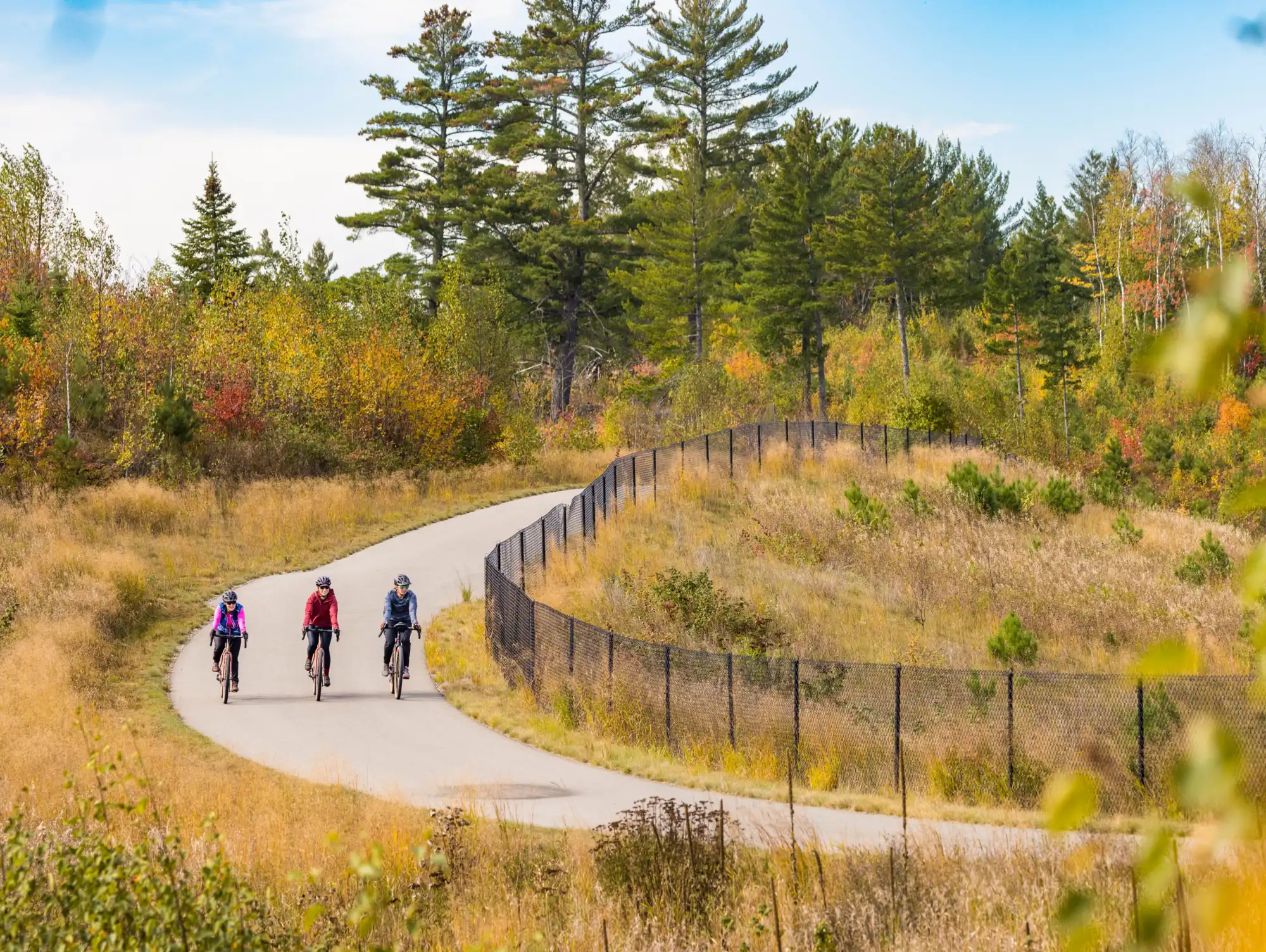
After more than 30 years of planning, fundraising and construction, the Mesabi Trail — at 165 miles, the longest paved bike trail in Minnesota — is finally finished.
Local officials and cycling advocates are celebrating the completion of the trail Tuesday afternoon with a ribbon cutting celebration at Depot Park in Tower.
The trail stretches between Grand Rapids and Ely. It passes abandoned mine pits and operating iron ore mines, through forests, wetlands and 28 towns.
The final section, a 6.5-mile stretch between Embarrass and Tower, was just completed this fall.
The idea for the trail was first hatched in the early 1990s. Former U.S. Rep. Jim Oberstar, an avid cyclist and longtime transportation advocate from northeast Minnesota, was an early visionary.
Trail usage has grown steadily but really started to climb in the last several years, said Sarah Ciochetto, deputy director of the St. Louis and Lake Counties Regional Railroad Authority, which manages the bike trail. Last year, 285,000 people used the trail.
“I’m anticipating a record number of trail users,” said Ciochetto of this year’s projections, “just because we’re doing the final grand opening and we’ve got a big fall color campaign push.”
Most cyclists come from the Twin Cities, but a growing number come from around the Midwest — and some have even come from abroad. Some cycle part of the trail; some the entire path over several days.
People camp, stay at motels or short-term rentals. The trail runs a shuttle service to help cyclists at the beginning and end of their trips.
When work on the trail first began, many of the mines in the area were abandoning their rail lines. The rail authority began to acquire the property and stitch the different sections together in what would eventually become the Mesabi Trail.
Ciochetto estimates about 30 to 40 percent of the trail consists of old railroad grades. The rest is a mixture of old logging haul roads and forest roads. In some places the rail authority has acquired its own corridor.
“It’s quite a mix of terrain, which makes us different than a regular rail trail because we’re not straight and flat; we’re all over the place,” said Ciochetto.
Highlights include the pedal across the Thomas Rukavina Memorial Bridge, which also carries U.S. Highway 53 over the Rouchleau Mine pit in Virginia. At 204-feet high, it’s the tallest bridge in the state.
Another section features a three-quarter-mile floating boardwalk through a riparian area and wildlife refuge.
Officials pieced together funding for the trail from a variety of sources, including the Environment and Natural Resources Trust Fund, grants from the Legacy Fund, the Minnesota Department of Natural Resources, Iron Range Resources and Rehabilitation and other funders.
Even though construction is complete, work on the trail continues and Ciochetto asks cyclists for patience.
“There are older sections of the trail that are hitting like 25 and 30 years old that need maintenance, and we are aware of it, but we have to find the funding, which is really the key piece.”
About the author
Dan Kraker is an MPR News reporter based in Duluth where he covers the people, economy and environment of northeast Minnesota.