Virginia’s discovery that roughly $3.7 million in sales tax funds were transferred out of a legally restricted account has raised a host of questions about what happened, why it matters and what comes next.
It also intersects with broader discussions on the city’s overall financial situation, which some leaders believe requires a higher tax levy, while others want the council to open up all options for discussion.
The sales tax issue is separate and perhaps the most pressing as it will require more short-term solutions.
Here’s a look at how the Iron Trail Motors Event Center (ITMEC) sales tax increase was created, why the missing money is such a significant issue and what options the city may have moving forward.
How was the ITMEC funded?
In 2016, Virginia was the recipient of $12 million through a state bonding bill for the new event center. The $32 million total project would also utilize $20 million in city-generated sales tax, if a 1% increase was approved by the Minnesota Legislature and voters.
In a 2019 special session, another bill passed that would allow the sales tax issue to go on the ballot that November for Virginia voters. The 1% increase was passed, allowing the city to raise up to $30 million off the added tax.
How does the 1% sales tax work?
The increase-only portion of the city’s sales tax would go into a fund for Virginia to pay down the rest of construction for the building. Additional funds over and beyond the $20 million — so, approximately $10 million — could be used to cover building upgrades and maintenance, primarily. The tax would last until the city either collected $30 million from the sales tax increase, or after a 20-year sunset in 2040.
Why is the missing $3.7 million such a big deal?
Two reasons.
First, the funds were apparently moved and spent without city council approval. That’s an issue in and of itself, and one the council will have deal with on some level.
The arguably bigger issue for Virginia is that use of those funds, from the 1% sales tax, were very clearly stated and outlined in the 2019 state law and 2020 ballot measure.
It is very iron clad that, without a change in the law, these funds could not cover cash flow problems or other funds. Since the city can only use these funds for something very specific, if the $3.7 million was transferred out and spent, Virginia has to replenish the state-directed fund in full.
Was the money actually spent?
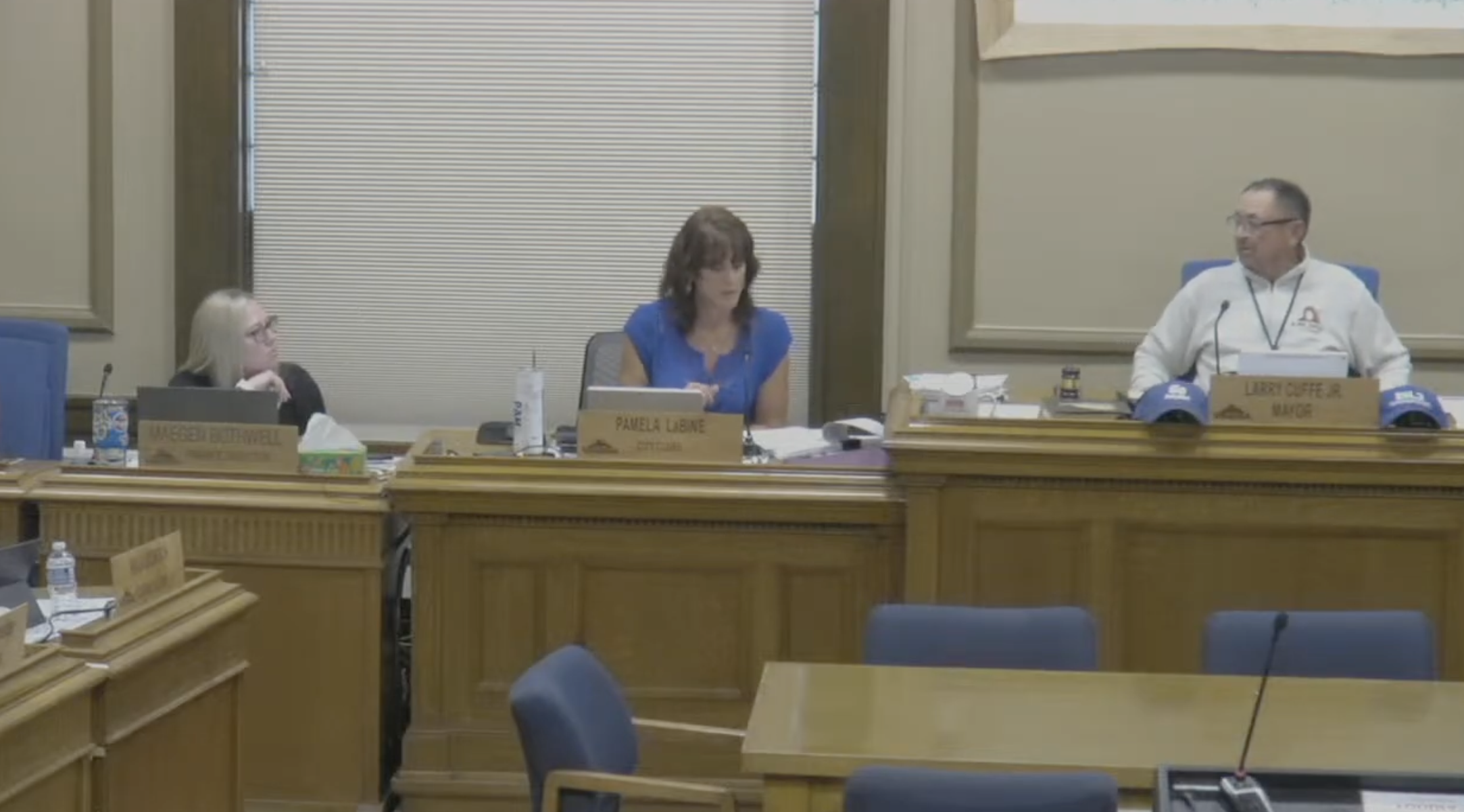
Mayor Larry Cuffe Jr. has said as much in public meetings, and it tracks with the ongoing hunt for it. If it were sitting unused in accounts, the balances would be easier to track and replenish. But if it went into the general fund, for example, it could be in multiple spots without much clear and obvious record.
Does this change anything about the 1% sales tax?
No, unless the state of Minnesota steps in.
Virginia still has to collect $30 million or wait for 2040 for the sales tax increase to be removed. Those are the options. One caveat is the Minnesota Legislature or executive branch, like the state auditor. The state could look into how the city managed the money and take action, but that would likely still require a state law change.
How can Virginia replace the $3.7 million?
The most sensible and least popular option is through a tax levy increase next year. That’s not going sit well with some residents, especially with the city’s current financial situation. It could sell an asset, but problem there is so many are tied up in loans or bonds that it would have to sell for the debt amount, plus $3.7 million more. There’s just not a realistic path to that option. Any request for loan or bridge funding would very likely be dead on arrival, all things considered.
What is the fallout from this?
Potentially a lot.
For starters, the legality of how the funds moved without council approval will come up. In the same vein, Virginia is currently out of compliance with the state law establishing the fund. Whether that invites more state scrutiny or not is unknown, but the city definitely opened the door for it.
Then there’s the political fallout. Will state leadership in coming sessions have an appetite to help Virginia, whether through local government aid or bonding projects? It also adds fuel for lawmakers already wary of funding methods that subsidize city budgets or provide direct funding to build projects.
Could there be local fallout?
It gets a little trickier here, but yes.
There is plenty of reason for local lawmakers to lose an appetite and support another future sales tax in the city. Same with bonding or other efforts. An extension of the current tax increase to help with steam conversion costs in Virginia didn’t make the cut this year.
With its neighboring cities, flip a coin?
Virginia voters approved the sales tax increase on their own, but the city is really the shopping hub for a 20-30-mile radius. So a lot of people beyond Virginians have been funding this account. Their money was lost in this situation, too.
That said, refunding the money through a levy falls solely back on Virginia taxpayers. But as mentioned, the tax structure and timelines remain unchanged, so the 1% increase will still be paid by outside consumers.
Where other cities could swing some weight is if Virginia openly lobbies for taxing cities on something like the ambulance service. It has the option levy the tax on its own or ask for levy increases on a city-by-city basis. This issue will almost certainly not help Virginia win favor there.
It is notable Cuffe said last week he had no plans to use the state statute option to enforce a taxing district on other local communities, as Cloquet does for its public safety services. He called it “taxation without representation,” but certainly some non Virginians on the Iron Range would say the same about the sales tax increase. Just different methods of getting there.
Is this type of accounting issue common?
There’s not a lot of data out there.
As not to speculate, it is logical smaller-scale missteps have occurred and were easily fixed. But $3.7 million is a lot of money for a city of Virginia’s size. Especially one with a negative cash flow balance. That’s the type of money one would notice if they all of a sudden had, when scaled to most average people and their personal budgets.
Interfund transfers are common in local governments, where a balance gets moved to cover a loss in another spot. Think of it as using your savings account to replenish your checking after an unlucky stretch of car repairs, for example.
As Virginia auditors noted in 2024, the city had nine such funds with negative cash flow that year and required such a transfer. They need a plan to correct that, the firm noted, and return money to the original account.
How did this happen?
Hard to tell until either the forensic audit is done, or city staff finds it themselves.
As we reported Friday, the budget in Virginia got increasingly complex for an 8,300-person city, and the auditors said more resources and training were needed for the finance department. One thing was clear from Tuesday’s meeting is there is definitely side-eyeing going on among some members of the council and staff.
A third party audit seems like the betting man’s pick no matter what.
Is the missing $3.7 million connected to Virginia’s broader financial problems?
Again, not directly. This is very likely an oversight issue (and to be clear, nobody has been accused doing anything like embezzlement, etc). What’s happening with city debt, cash flow, etc. is more a reflection on policies and priorities of the city council.
Why have Virginia’s finances become so complicated?
To sum up Friday’s report: The decision to invest in infrastructure, equipment and the like didn’t complicate things as much as how they invested. By bonding and taking debt from different areas, there are now a variety of different reporting requirements.
Imagine if you had to report your income and taxes to the feds one way, the state another, the county a third and the city a fourth. That’s not apples to apples, in this case, but it’s about as close you can get for the average person.
This is why the auditing firm highlighted more attention on the financial department’s training, investment and so forth.
Accessing the Virginia City Council
Virginia City Council agenda, minutes and packets can be found on the city’s website. Recordings of the meetings can be found on YouTube.
Disclosure: Iron Range Today’s policy on artificial intelligence requires it to disclose use of AI in content. AI was used in this story to help order the FAQ questions, and suggest rewording of some questions to better represent the intent of the answer. AI was not used to edit or suggest changes to any other content.