It was late 2018 when officials from Mesabi Metallics and Essar Group gathered to formalize an agreement many in Minnesota suspected was a long-done deal.
They stood inside a penthouse at Trump International Tower belonging to Ravi Ruia, the Indian billionaire who co-founded the Essar empire, as he reasserted control of the stalled Iron Range mining project his company started and bankrupted.
Weeks earlier, the Swiss commodities giant Mercuria announced plans to acquire a majority stake in Mesabi Metallics and secure a $650 million financing package meant to assuage the worries of state officials as the company missed numerous payments and construction deadlines.
The Mercuria deal never transpired. Minnesota’s efforts to exclude Essar from the project ultimately failed, and the company regained control. Pellet production has not materialized.
Eight years after the penthouse gathering, on Sept. 28, familiar names and players resurfaced in a room together. This time in the Oval Office.
President Donald Trump, flanked by Ravi and Rewant Ruia and Mesabi Metallics CEO Joe Broking, announced plans for a $15 billion steel complex in Iowa, supplied by iron ore from the company’s Minnesota mine.
The announcement caught many in the industry off guard. But behind the latest promise of a massive investment was a familiar web of corporate relationships, government financing and political connections stretching back to the project’s troubled past.
****
A $770 million lifeline, and a familiar connection
Days before the White House announcement, the Export-Import Bank of the United States approved a $770 million loan to Mesabi Metallics, a key piece of federal financing for the Nashwauk project.
The loan, approved under EXIM’s Make More in America initiative, is intended to support development of the iron ore mine and a direct-reduced iron (DRI) pellet plant with a planned annual production capacity of 7.5 million metric tons.
“It all starts with mining more in America,” EXIM Chairman John Jovanovic said during the White House announcement. “This mine is the first mine opened in America in 50-plus years focused on iron ore. EXIM financed it … What you see here today is private capital flowing in to rebuild America and to build America’s future.”
Jovanovic, a Trump appointee, previously served as an investment director for Mercuria in North and South America, the same commodities company that sought to acquire a majority stake in Mesabi Metallics eight years earlier.
Whether Jovanovic personally participated in Mercuria’s planned investment is unclear. His LinkedIn profile shows he was at Mercuria from 2016-2020, a time frame that overlaps with the 2018 acquisition attempt.
Questions sent to the EXIM Bank, Mercuria and Mathieu Vallot, a Swiss-based Mercuria investment director connected to the project, were not returned. A review of hundreds of public court documents related to Mesabi Metallics named only Vallot and Mercuria CEO Marco Dunand.
A former lobbyist for Mesabi Metallics, with direct knowledge of its operation, said they did not recall if Jovanovic was involved.
The 2018 investment announcement isn’t Jovanovic’s only overlap with his former employer. Earlier this year, the EXIM Bank launched Project Vault, a $12 billion supply chain security initiative consisting of $10 billion from EXIM and $2 billion in private investment. Mercuria was among the initial suppliers named in the project’s formation.
Questions for the EXIM Bank and Mercuria about his role in Project Vault and with the company were also not returned.
****
From Kentucky to Iowa
Beginning in early 2025, Essar officials targeted Kentucky for the site of a 7 million metric ton DRI plant fed by the Minnesota mine.
It established Mesabi GreenIron in the state, posted jobs and hired a top lobbying firm to the tune of $69,500 through August 2026 for bills on infrastructure and “Buy American” initiatives. A permit application was submitted to Kentucky regulators in that same month.
Broking, the Mesabi Metallics CEO, said at the time multiple states were being explored to house the steel complex, including Minnesota where the steelmaking facility was already approved by regulators, and Arkansas.
When attention turned to Iowa is unclear.
A state representative told The Associated Press last week that Iowa “did get kind of into the mix late,” but did not expand on the state’s involvement. Sen. Jason Schultz called the project one that “popped up.”
Iowa Republican Sen. Dan Dawson questioned the state’s competition in negotiations with the company. Citing conversations he had with Arkansas officials, Mesabi Metallics sought lucrative tax incentives and proposed a site in Mississippi County, where three mills owned by U.S. Steel and Nucor already exist.
“At a certain point, they walked away from negotiations because the company seemed to lack equity and could never locate where the equity would come from in the paperwork they provided to the state,” he said during debate, later adding “Arkansas, I do not believe, was ever actually at the table seriously.”
Sen. Janet Petersen also questioned Broking on the project financing, which he said included equity from Essar, but noted the capital structure was still in development.
Debi Durham, director of the Iowa Economic Development Authority, said she believed Mesabi Metallics could pull the project off, but also noted its “missteps” in Minnesota.
Still, despite the late start and questions, the process moved hastily through the state.
Days after the White House announcement, the Iowa Legislature was called in for a special session and approved the framework for more than $1.3 billion in public dollars and tax savings for Essar.
A memorandum of understanding established a 60-day window for exclusive negotiations between Iowa officials and the company, leaving the final agreement to be worked out.
“Really, what this does, it changes the economic trajectory for this region,” said Iowa Gov. Kim Reynolds during the White House announcement. “It’s one of the most depressed regions in Iowa, but not only for Iowa, but for the whole Midwest and the over-the-fence supply chain that will come to this area.”
Mesabi Metallics has recently removed a series of jobs posted for positions in Kentucky and added listings in Iowa.
It also assembled a lobbying team in Iowa as lawmakers prepared to consider the incentive package. State records show four lobbyists from LS2group registered to represent the company on Sept. 29, one day after the White House meeting. The lobbyists subsequently registered support for legislation expanding the state’s economic development incentives.
Among them was Jeffrey Boeyink, who was chief of staff for former Iowa Gov. Terry Branstad and a previous executive director of the Republican Party of Iowa. Another, Brittany Lumley, previously worked on tax-credit and economic development legislation for the Republican majority in the Iowa House.
Mesabi Metallics’ efforts to secure government support extended beyond state capitals, reaching Washington and the White House.
It enlisted a longtime Trump adviser to lobby the federal government. Federal disclosures show the company paid at least $240,000 to SHW Partners, a firm led by Jason Miller, whose reported lobbying activities included the Export-Import Bank, White House and several federal departments.
Miller’s lobbying registration for Mesabi was terminated July 31, less than two months before EXIM approved the $770 million loan. The disclosures do not identify which EXIM officials he contacted or establish whether his lobbying influenced the financing decision.
He joined the White House around that same time frame, reportedly in a special government employee role focused on messaging, a designation that allowed him to retain his lobbyist contracts.
The White House did not return a request for comment.
****

Mercuria’s unfinished business
Questions about whether Essar can deliver the financing behind its ambitious plans are hardly new.
The company broke ground on the Nashwauk project in 2008 and filed for bankruptcy in 2016. Executives associated with its parent company were later accused in a lawsuit of diverting approximately $1 billion from the project to fund other Essar operations.
After Mesabi Metallics emerged from bankruptcy with the project, it repeatedly missed state deadlines for financing and construction. Those struggles continued even after Essar regained control.
In September 2018, Mercuria announced plans to acquire a majority stake in Mesabi Metallics and arrange a $650 million financing package, offering what appeared to be a path forward for the troubled Nashwauk project.
“Mercuria’s involvement was a really hot second because news of Essar’s return came pretty quickly after the Mercuria announcement,” the former Mesabi Metallics lobbyist said.
Still, its interest in Mesabi Metallics appeared to be serious, even as Essar joined the mix months later.
Company officials met with then-Gov. Mark Dayton in 2018. Vallot, the Swiss-based investment director for Mercuria, wrote to Essar in 2019 reaffirming the company’s interest in financially backing it after six months of due diligence research.
“Mercuria is prepared to engage with you as required to materialise that intent and provide financial support to the Project on mutually agreeable terms,” he wrote. “It is acknowledged that the Project is not without challenges and complications – however, we are committed to identifying solutions in cooperation with you and finding a path forward…”
Later that year, in July 2019, executives for Mesabi Metallics, Mercuria, Essar and the Canadian-based Stelco co-signed a letter to state officials that presented a consortium approach to operating the project without Essar’s direct involvement.
Both the funding and consortium management never materialized. Stelco was eventually purchased by Cleveland-Cliffs, while Essar retained control of the mine.
****
A familiar connection at EXIM
The Mercuria connection did not end with the failed deal, and resurfaced through the federal agency now financing it.
Jovanovic, the current EXIM Bank chair whose agency approved a $770 million loan for Mesabi Metallics, was working as an investment director for Mercuria covering North America.
While his direct connection to the funding and consortium are unknown, his ties to Mercuria are not merely historical. The commodities trading giant is also participating in another major initiative backed by the EXIM Bank under Jovanovic’s leadership.
In February, EXIM announced Project Vault, a $12 billion public-private initiative to establish a strategic reserve of critical minerals for American manufacturers. The program includes up to $10 billion in federal financing and nearly $2 billion in private-sector investment.
Mercuria was among three commodity trading firms initially identified as suppliers for the initiative, alongside Hartree Partners and Traxys.
On Sept. 23, one day before EXIM approved the Mesabi Metallics loan, Mercuria announced a $500 million commitment to VaultCo, the company implementing the critical minerals reserve.
“Project Vault is exactly the kind of transaction EXIM was built to deliver,” Jovanovic said at the agency’s annual conference.
Yet, the arrangements place Mercuria and Mesabi Metallics — companies whose proposed partnership failed to materialize years earlier — in separate financing initiatives backed by the same federal agency now led by a former Mercuria executive.
The relationships raise questions about Jovanovic’s involvement in the earlier Mesabi negotiations, whether he participated in the agency’s consideration of either initiative, and what safeguards were applied to potential conflicts involving his former employer.
Jovanovic’s work at Mercuria does not appear in his 2025 federal financial disclosures because it predates the reporting period, which generally covers outside employment during the two preceding calendar years and the year of filing.
****
Questions of oversight and transparency
Months before the mine and steel complex announcements, the EXIM chairman faced questions from Congress about political influence, conflicts of interest and transparency at the federal lending agency.
During a March hearing before the Senate Banking Committee, Sen. Elizabeth Warren, D-Massachusetts, pressed Jovanovic on whether companies connected to Trump, his family or administration officials would receive preferential treatment in securing federal financing.
“Regardless of who you are, Senator Warren, if you come to the Export-Import Bank of the United States looking for a loan, you face the same rules, the same process, the same criteria,” Jovanovic said.
Warren’s concerns extended to the agency’s independent oversight.
Trump had fired EXIM Inspector General Parisa Salehi in 2025, part of a broader removal of federal watchdogs. Warren questioned the firing and the absence of Democratic appointees on EXIM’s board, arguing that both weakened safeguards against political influence.
The inspector general’s office continued operating under acting Inspector General Jonathon Walz, whose subsequent reports identified significant oversight issues at the bank.
In its report covering April through September 2025, the office disclosed 93 outstanding recommendations intended to strengthen agency operations, internal controls and protections for taxpayer resources. During that six-month period, the watchdog issued six reports containing 16 new recommendations.
The inspector general identified four continuing management challenges for EXIM, including addressing risks in its lending portfolio.
The watchdog also acknowledged steps taken under Jovanovic’s leadership to address those deficiencies. Following his confirmation in September 2025, Jovanovic expressed interest in resolving outstanding recommendations, and EXIM established a working group in November to address them.
“It’s not acceptable, I want zero outstanding,” he said to the House Financial Services committee. “We’re going to continue to work with the Office of Inspector General.”
The agency’s lending practices would face another test six months later when it approved funds for Mesabi Metallics, a company with a history of missed deadlines, unfulfilled financing commitments and questions about its ability to fund the Nashwauk project.
The decision came during a closed board meeting, leaving the public with limited information about how the agency evaluated the company’s financial position, assessed the risks of the loan or determined what safeguards would protect taxpayers.
The available record does not establish that Jovanovic’s former employment or political connections influenced the approval. But the financing brings the questions raised during congressional oversight hearings into focus: how EXIM evaluates borrowers, ensures consistent treatment and protects public funds when backing high-risk projects.
****

Steel of Dreams
It was Sept. 17 when a red, white and blue mine blast colored the typically rusty dirt of the Iron Range as Jovanovic, Minnesota politicians and company officials visited a mine Broking described as on the “precipice of production.”
But even as it had yet to produce commercial pellets, Mesabi Metallics already had expansion on its mind.
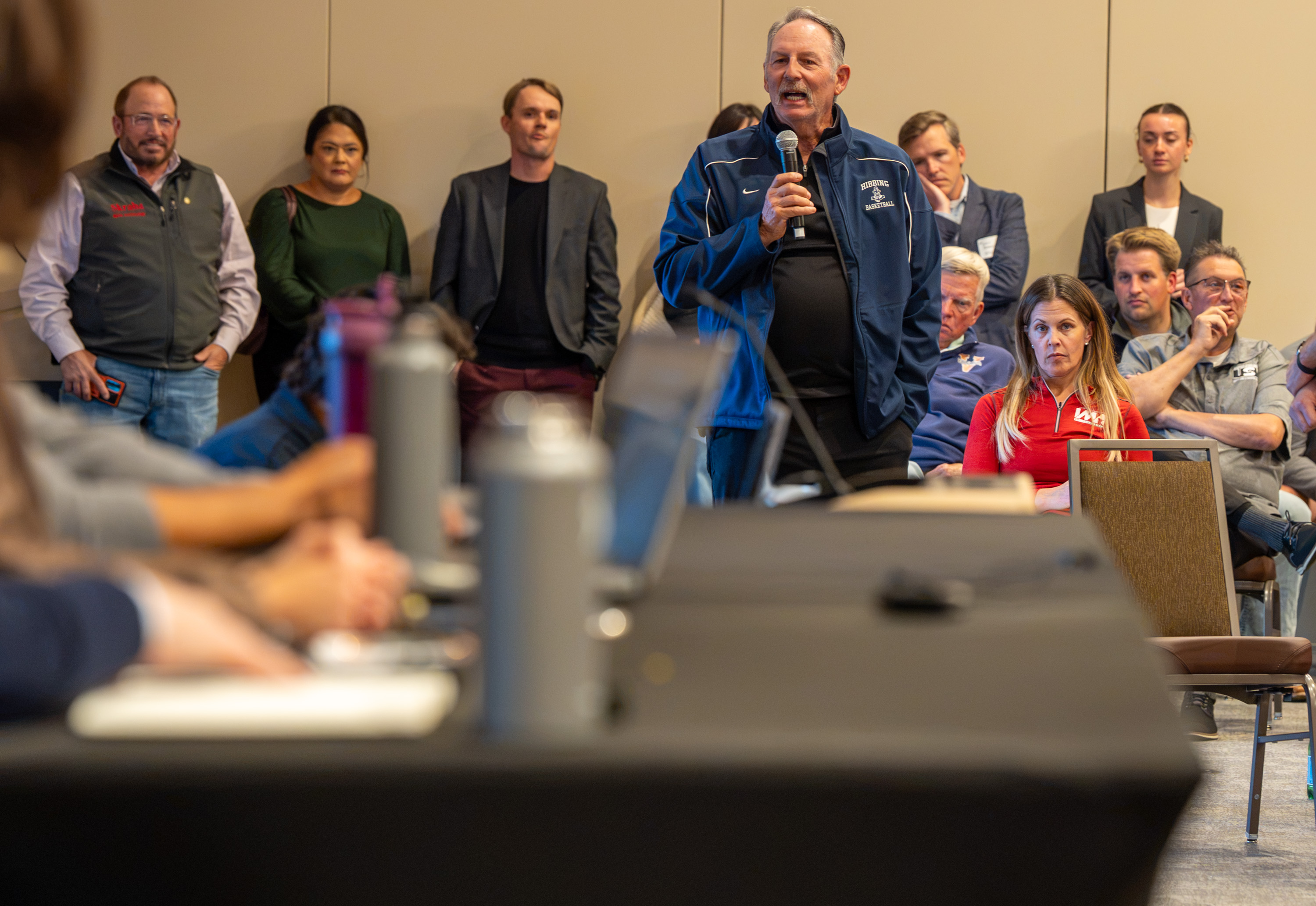
The CEO was not only touting the $770 million EXIM investment, one week before the federal agency would deliver its final vote of approval, but two days earlier told the Itasca County Board the company was prepared to invest another $5 billion into Nashwauk.
Congressman Pete Stauber, R-Minnesota, in a statement issued by EXIM, pointed out another potential $10 billion the bank announced for Mesabi Metallics operations in Minnesota. In 11 days, the president would be in the Oval Office with Broking, Jovanovic and the Ruias to announce the $15 billion Iowa steel complex.
For Minnesota, the Iowa announcement was met with the effect of a muffled scream.
Walz, who as governor has had a roller coaster relationship with Essar through efforts to ban the company then taking a victory lap on the mine, has been silent.
Local municipal leaders, many of whom voiced full-throated support for the mine project, have also faded into the background. Iron Range lawmakers expressed frustration and others took aim at state Democrats.
“This region has taken enough gut punches,” said State Rep. Spencer Igo, R-Wabana Township. “We cannot keep watching billions of dollars in investment and thousands of good-paying jobs go elsewhere and pretend there is nothing we can do about it.”
The seemingly apathetic reaction comes as the Range is trudging through idles at two mines and the reality of a workforce exodus the longer layoffs drag on.
Mesabi Metallics has recently represented a beacon of hope, though it would not replace the 700-plus miners on the shelf.
While a steel making facility was always in the plans for Nashwauk, which was born out of the 1985 closure of Butler Taconite, those expectations have been largely cast aside as the company could face repermitting.
Mesabi Metallics still owes the state around $20 million for historical infrastructure costs in Nashwauk. Essar has yet to meaningfully connect with the United Steelworkers union on the Nashwauk project.
At the Sept. 15 meeting of the Itasca County Board, Broking recalled building a pellet plant for Magnetation in Reynolds, Indiana around 2014. He said permitting in Minnesota would not have allowed the company to build it as quickly as the customer wanted, so they moved on.
“Had we built that pellet plant in Minnesota, I would contest that those assets would still be running today, despite the economic downturn that occurred,” Broking said. “The permitting process forced us to do that. If we don’t change this, we will continue to see things like this happen.”
Two days later, the contrast between two Essar and Mesabi Metallics gatherings, eight years apart, was striking.
If the 2018 meeting at Trump International Tower was a private relaunch for Essar, the Sept. 17 celebration at Nashwauk was its most public display of ambition yet.
Massive American flags hung from 400-ton haul trucks. A marching band played. Dignitaries gathered to watch a ceremonial mine blast.
Some of the names had changed, but Ravi Ruia was still there, greeting guests at the mine his company had fought to regain control of. Eleven days later, he stood beside Trump in the Oval Office.
The promises remained the same, if not grander.
“We are a family business, and above all we are builders,” Ruia said. “We have built world-class steel plants, oil refineries, ports, power plants and various other assets in India and overseas. Mr. President, we have now chosen to build our next major chapter here in America.”
Artificial intelligence disclosures: AI was used in this story to help research through the hundreds of pages of court documents. All findings used were verified by a real human. Read our AI policy.